
 Direct-to-Consumer
 Sep 17, 2025
Crafting Your Return Policy: What to Include In a Customer-Friendly Returns Policy
You may be tempted to pretend returns don’t exist, but free and easy returns have become a baseline expectation for eCommerce shoppers, so they aren’t going anywhere. According to a survey by the National Retail Federation, 59% of consumers are more likely to consider return policies during the holidays, and Zigzag found that 84% of...
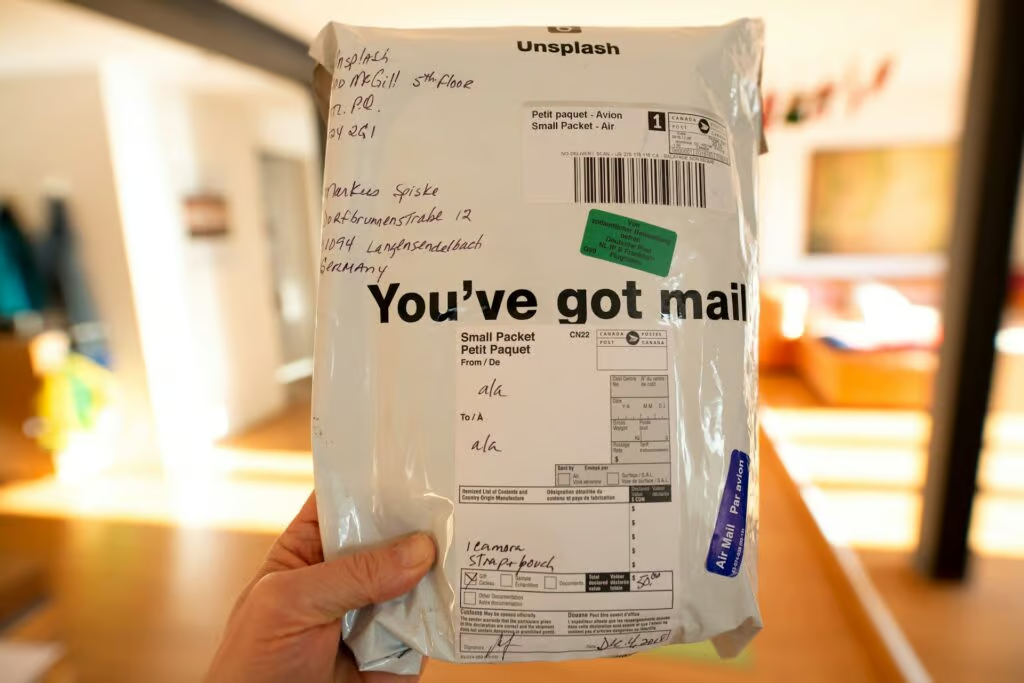
You may be tempted to pretend returns don’t exist, but free and easy returns have become a baseline expectation for eCommerce shoppers, so they aren’t going anywhere.
According to a survey by the National Retail Federation, 59% of consumers are more likely to consider return policies during the holidays, and Zigzag found that 84% of consumers preview a brand’s return policy before making a purchase.
Instead of lamenting their existence, craft an airtight yet customer-friendly returns policy to protect your brand, revenue, and customer experience.
In this article, we’ll go over why your return policy is vital, what to include, where to share your returns policy, best practices for crafting your policy, and more.
Importance of a good return policy
Your return policy sets the expectations between your brand and your customers. It helps to build trust, protect your brand, prevent malicious purchases, and keep things operationally streamlined.
A well-considered return policy can:
Increase conversions: Shoppers want confidence that they can return items if needed. A transparent policy lowers purchase hesitation and can directly improve conversion rates.
Protect brand reputation: Inconsistent or confusing policies frustrate customers and damage credibility. A positive return experience, on the other hand, becomes part of your brand’s reputation.
Boost customer retention: Easy returns encourage repeat purchases. Customers who feel taken care of during a return are more likely to shop with you again. According to WeSupply, more than 90% of consumers are more likely to become repeat customers following a straightforward and easy return process.
Enhance operational efficiency: A standardized policy reduces customer service queries, clarifies policy upfront without debate, speeds up returns processing, and keeps fulfillment workflows smooth.
What to include in your return policy
Now that we’ve covered why you should have a good return policy, let’s go into what should be in it. Here are a few things to detail in your policy.
Timeframe
State how long customers have to return an item. For example, 30, 60, or 90 days. You may decide this based on industry standards, with optional seasonal adjustments.
For example, clothing may have a shorter return policy to prevent malicious returns, and mattresses may have a longer return policy to give customers enough time to get used to the product.
Some retailers also extend their returns window over the holidays. This allows for gifts purchased early (for example, in November) to be returned after they’ve been given (for example, in January).
Return conditions
Explain what condition your items must be returned in, in order to be eligible for a return. For example, you might require items to be unused, tags attached, in original packaging, or otherwise.
This is a good time to remind shoppers as well of any items that aren’t covered in your return policy. For example, exceptions for final sale items, or personal items such as skincare or underwear.
You can also highlight here that all items will be inspected upon return before processing any refunds or exchanges.
Refund options
Explain the options consumers have for their refunds, and clarify which items are eligible for returns versus warranty.
The main difference is a straight return will involve a refund, whereas a warranty only guarantees that if anything is wrong with the product within a timeframe, you will make it right.
If you are offering a straight refund, you should always send payments back in the mode that they were sent to you. For example, credit card purchase refunds must go back to the same credit card.
Tip: When someone wants to send in a return, offer the option to get store credit or exchange the item instead, if something was wrong.
Return process
You also want to clarify what the process is for initiating a return. Ideally, you’ll have a quick outline of steps and utilize a self-service portal.
For example, a place to initiate a return, print a packing slip, and then drop off an item at any post office.
You may also offer customers the option to return items in store, if you have physical stores. This gives them a chance to browse your items again, where they might decide on an exchange or store credit instead.
Tip: Requiring returns to go through a self-service portal, or an account, also helps you catch bad actors that may be abusing your return policy. You can use this tool to monitor any patterns of fraudulent returns, and build it into your policy that if a shopper (identified with a mobile number or email address) has sent in a fraudulent return they are not covered by your return policy.
Shipping cost
Now, who pays for returns? Should the customer pay shipping for returned items, or will you provide labels? Be upfront about who shoulders the logistics cost of return shipping.
This decision depends on your business model, margins, and customer expectations. Options include:
- Customer-paid returns – Lowers brand costs but may discourage purchases. In fact, 41% of respondents in a KPMG UK poll said they wouldn’t purchase if returns weren’t free.
- Brand-paid returns – Encourages conversions but can be expensive if not managed carefully.
- Hybrid approach – For example, free returns for defective or incorrect products, with customer-paid shipping for preference-based returns.
- Loyalty incentives – Offer free returns as a perk for VIP members or subscription customers.
When evaluating this decision, consider the long-term value of retaining customers versus the short-term expense of covering shipping.
Tip: Use iDrive Logistics’ shipping solutions to find the best shipping rates for every situation.
Processing times
Include processing times to give your customers an idea of how long refunds or exchanges usually take. This helps keep things transparent, and will prevent too many customer support tickets asking how long someone needs to wait for a refund.
Contact information
Finally, always include contact information. This is so your customers can get help when needed, and will go a long way to saving a brand relationship and potentially some would-be loyal customers in the future.
Klarna found that 84% of customers wouldn’t shop with the same retailer again following a poor returns process, so you want to make sure customers know who to contact for help.
Quick tips and best practices for crafting your return policy
Keep it simple and jargon-free: Avoid confusing terms and give them a quick and easy way to find what they want to know.
Align with your brand voice: Your tone matters, since it’s still your brand speaking to your buyers. Whether you’re friendly, professional, or premium, stay on brand.
Be generous (within reason): A flexible window or free returns can boost conversions.
Automate where possible: Use return portals and auto-generated labels to save time for customers and your team.
Consider sustainability: Offer eco-friendly packaging return options or consolidate shipments where possible.
Test and iterate: Collect feedback and adjust policies based on return rates and customer satisfaction.
Follow the numbers: Use data to identify patterns and adjust your return policy accordingly. Return data can also identify product issues, packaging problems, or carrier performance concerns.
Ensure legal compliance: Meet consumer rights requirements in each region where you operate.
Find the right 3PL partner: Ensure your fulfillment partner can handle returns efficiently, including inspections, restocking, and label generation.
Integrate your systems: Sync returns processes with order management and customer communication platforms.
Key areas to display your return policy
Now that you have a great return policy, it’s time to ensure your shoppers and buyers actually see it. Here are a few places to make sure your return policy is prominently displayed.
- Website footer & FAQ page – People will be looking here first when they want to find your return policy.
- Product pages – Having your policy linked to from product pages can provide reassurance before purchase.
- Checkout flow – Give customers a quick reminder at the point of decision.
- Order confirmation emails – Reinforce transparency and give buyers another reminder post-purchase.
- Packaging inserts – Mentioning a link to your return policy somewhere in package inserts will give customers clear instructions if they initiate a return.
- 3PL/client portals – Reiterate your return policy in your logistics portals to help partners managing fulfillment stay aligned on customer service standards.
Wrapping up: Your return policy protects your brand and customer experience
A customer-friendly returns policy drives trust, loyalty, and operational efficiency. More than just a box to check off, turn your returns into a conversion factor.
For brands and 3PLs, the right policy not only improves the customer experience but also creates opportunities to reduce costs and streamline logistics.
Audit your current policy, look for gaps, and consider how a fulfillment partner like iDrive Logistics can help you optimize shipping, simplify returns, and strengthen customer satisfaction.
Related articles
-
 Direct-to-Consumer
Feb 24, 2025
Direct-to-Consumer
Feb 24, 2025
Managing Backorders: Avoiding Delays, and Keeping Customers Happy
Read moreIf backorders or out-of-stock items are a common occurrence, it can be damaging to a brand’s reputation. In this article, we’ll discuss what backorders are, how to avoid them, and how to protect your customers when they occur.
-
 Direct-to-Consumer
Dec 09, 2024
Direct-to-Consumer
Dec 09, 2024
Moving From Amazon 1P to DTC
Read moreLearn the differences between Amazon 1P and DTC, along with the benefits and challenges accompanying this transition.
-
 Direct-to-Consumer
Apr 07, 2025
Direct-to-Consumer
Apr 07, 2025
The Complete eCommerce Tech Stack for Small Businesses
Read moreTechnology empowers small eCommerce businesses not just to compete with industry giants but to thrive and reach their goals more efficiently.