
 eCommerce Logistics
 Jul 14, 2025
Mastering Inventory Tracking and Optimization: Strategies for Better Business Efficiency
If there’s anything we’ve learned from the past years, inventory management isn’t just a back-office task; it’s a business essential. From unexpected supply chain disruptions to sudden changes in customer demand, companies now realize the importance of keeping a close eye on what’s in stock, what’s moving, and what’s not. Simply put, inventory tracking is...
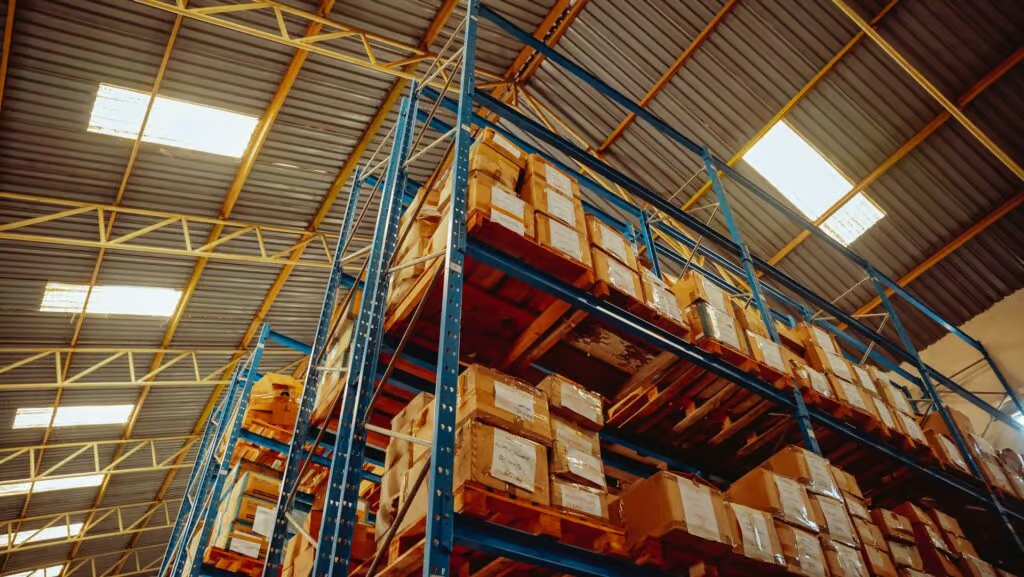
If there’s anything we’ve learned from the past years, inventory management isn’t just a back-office task; it’s a business essential. From unexpected supply chain disruptions to sudden changes in customer demand, companies now realize the importance of keeping a close eye on what’s in stock, what’s moving, and what’s not.
Simply put, inventory tracking is knowing what you have, where it is, and how it flows through your system. Plus, inventory optimization ensures you have the right amount of product in the right place at the right time. When these two work together, they help your business stay efficient, avoid costly mistakes, and keep customers happy.
So, let’s explore practical methods, tools, and best practices for better inventory control. Whether you’re just starting to get organized or looking to fine-tune your current system, you’ll find strategies here that can make a real difference.
What is inventory tracking?
Inventory tracking monitors the movement, quantity, and location of products throughout your supply chain—from the moment they enter your warehouse to the time they reach the customer. This is a core component of warehousing and inventory management, helping businesses stay organized, reduce waste, and meet customer demand.
To manage inventory effectively, it’s important to understand the different types of inventory you’ll be tracking:
- Raw materials: The basic inputs to produce goods
- Work-in-progress (WIP): Items that are in the process of being manufactured
- Finished goods: Products that are ready to be sold or shipped
How you track these items depends on the tools and systems you use. Here are some standard inventory tracking methods:
- Manual (spreadsheets): Often used by smaller businesses, this method can work initially. However, this can be prone to errors and may not be efficient as you scale your business.
- Barcode systems: These allow for quicker and more accurate data capture, streamlining inventory counts and order processing.
- RFID: Radio-frequency identification (RFID) is a step up from barcodes, allowing real-time tracking and automation without line-of-sight scanning.
- IoT-based real-time tracking: IoT systems use sensors and cloud-connected devices. These provide live updates on stock levels, location, and even conditions like temperature or humidity.
Understanding inventory optimization
When managing inventory, tracking what you have is only half of the battle. The real challenge lies in inventory optimization. This process ensures you have the right amount of stock in the right place at the right time, without tying up unnecessary capital or risking a stockout.
But why is this so important? Inventory that sits too long costs money, and inventory that runs out costs sales. Poor planning leads to delays, unhappy customers, and excess waste. Optimization strikes that perfect balance, supporting efficiency, agility, and profitability across your supply chain.
Let’s break down some of the key goals of inventory optimization:
- Reduce holding costs: Freeing up cash flow and minimizing storage-related expenses.
- Prevent stockouts and overstocking: Ensuring you’re not scrambling to fill orders or sitting on piles of unsold goods.
- Improve order fulfillment: Enhancing customer satisfaction by having the right products available when needed.
To achieve this, businesses often rely on a few proven inventory optimization models:
- Just-in-Time (JIT): A lean approach where inventory is replenished only when needed, reducing excess stock but requiring precise forecasting and stronger supplier relationships.
- ABC analysis: A method of categorizing inventory into three groups: A for high-value items, B for moderate value, and C for low-value items.
- Safety stock calculations: This determines the extra inventory needed as a buffer to protect against variability in demand or supply delays.
Common challenges in inventory management
Even with the best intentions, inventory management can get messy. Whether it’s delayed updates, poor communication, or excess stock collecting dust, the struggles are real. Here’s a look at some of the most common inventory management challenges businesses face and what you can do to overcome them.
Lack of real-time visibility
When you lack up-to-date insight into your stock levels, you risk making decisions based on outdated or incomplete information, which can lead to missed sales, delays, or unnecessary purchases.
What you can do about it: Adopt inventory tracking systems that support real-time updates, like RFID or IoT-based solutions. Integrated dashboards and cloud-based platforms also help provide instant visibility across warehouses and locations.
Inaccurate data or forecasting
Relying on guesswork or outdated spreadsheets can quickly lead to bad decisions. If your forecasts are off, your inventory will be too, which means more waste and lost sales.
What you can do about it: Use data-driven forecasting tools that analyze historical sales, seasonality, and trends. Combine this with regular cycle counts and audits to keep your inventory records accurate.
Overstocking/Understocking
Too much inventory ties up cash and storage space, while too little means you can’t meet demand. Either way, it’s costly.
What you can do about it: Implement inventory optimization models like ABC analysis and safety stock calculations. These can help you plan smarter, prioritize key items, and avoid extremes on both ends.
Disconnected systems or departments
When sales, purchasing, and warehouse teams aren’t aligned, there is miscommunication. Orders are delayed, products go missing, and decisions are made in silos.
What you can do about it: Invest in an integrated inventory management system that connects teams and centralizes data. This helps everyone stay on the same page and improves coordination across your operations.
Tools and technologies for inventory tracking
Today, businesses have access to powerful tools that make tracking inventory faster, more accurate, and more efficient. These modern systems reduce human error and help companies stay agile in a fast-moving market. Let’s discuss some of the key technologies driving smarter inventory tracking.
ERP (enterprise resource planning) systems
ERP systems like Oracle and NetSuite integrate inventory management with core functions like accounting, sales, and procurement. This creates a single source of truth for the entire organization, helping teams make better decisions with accurate, real-time data.
Why it matters: An ERP ensures that everyone, from the warehouse floor to the finance team, is working with the same inventory information, reducing miscommunication and improving overall efficiency.
Inventory management software
Dedicated inventory platforms like Zoho Inventory and Fishbowl are designed to help businesses track stock levels, manage stock reorders, generate reports, and automate routine tasks. Many of these systems are cloud-based, so they’re accessible from anywhere and are ideal for multi-location businesses.
Why it matters: These tools give better visibility into your inventory, streamline daily operations, and help reduce manual work so you can focus on growth.
AI and machine learning in demand forecasting
AI-powered tools are changing the game by analyzing vast amounts of data: historical sales, market trends, seasonality, and even weather patterns, to generate accurate demand forecasts.
Why it matters: Smarter forecasting helps you stock what you need when you need it. This reduces excess inventory and stockouts while helping you respond more quickly to shifts in customer demand.
Inventory optimization best practices
Optimizing your inventory isn’t just a one-time fix. It’s an ongoing effort that requires the right habits, tools, and collaboration across your business. Here are proven tips to help you stay ahead of demand, reduce waste, and keep your supply chain running smoothly.
- Conduct regular audits and cycle counts: Don’t wait for year-end inventory to find out something’s missing. Regular cycle counts, where you audit portions of inventory on a rotating schedule, help catch errors early, improve accuracy, and maintain trust in your data.
- Use forecasting and historical data: Guesswork no longer cuts it. Use historical sales data, seasonal trends, and demand forecasting tools to plan your inventory needs effectively. The more data you use, the better your forecasts, and the fewer surprises you’ll face.
- Implement reorder points and safety stock levels: Avoid the extremes of stockouts and overstocking by setting reorder points (when to restock) and safety stock levels (extra buffer for demand spikes or supply delays). Then, you can review and adjust these settings as your business and customer demand evolve.
- Collaborate across teams: Inventory optimization is more than a warehouse issue and also involves sales, purchasing, finance, and logistics. Hold regular team check-ins to align on forecasts, promotions, and supply chain updates.
- Leverage analytics dashboards for smarter decisions: Modern inventory tools come with dashboards that give you real-time insights into your stock levels, turnover rates, fulfillment times, and more. Use these dashboards to spot trends, track performance, and make data-driven decisions.
Streamline your inventory workflow with iDrive Logistics
More than just operational tasks, inventory tracking and optimization are strategic advantages. They combine accurate and real-time tracking with smart optimization practices, helping businesses reduce costs, improve fulfillment, and respond faster to changing market conditions. In a world where supply chain and customer demand shift, it’s important to stay agile, efficient, and competitive.
Are your systems giving you the visibility and control you need? Are your processes supporting growth or holding it back? Now is the perfect time to take a closer look at your current inventory setup!
If you’re ready to take the next step, iDrive Logistics is here to help! Contact us today for a consultation, and we can help you streamline your operations or tailor a solution that fits your business.
Related articles
-
 eCommerce Logistics
Oct 21, 2022
eCommerce Logistics
Oct 21, 2022
Warehouse Management Best Practices: 5 Tips for Optimized Processes
Read moreWarehouses are the heart of many companies, but operations can be difficult to manage. Continual improvement is the best approach to overcoming this challenge. In this article, we’ll discuss the industry’s best practices for warehouses.
-
 eCommerce Logistics
Dec 30, 2024
eCommerce Logistics
Dec 30, 2024
Prevent Stockouts: 5 Ways to Avoid Going out of Stock
Read morePlenty of businesses have been missing out due to out-of-stock issues over the last few months. So how can you avoid losing money because of out-of-stock problems? One of the best ways is by implementing technology that fosters visibility.
-
 eCommerce Logistics
Feb 03, 2025
eCommerce Logistics
Feb 03, 2025
8 Effective Ways to Offer Free Shipping
Read moreAmid all the talk of recession and the eye-popping statistics on inflation, many businesses are turning to a strategic focus: customer retention. There are many ways to do this, but one that quickly comes to mind is shipping experience.