
 iDrive Partners
 Sep 12, 2025
Why Dropship Automation Matters in a Parcel-Centric Logistics Strategy
For eCommerce businesses, particularly those in industries like firearms, automotive, or apparel, dropshipping offers a way to scale without the burden of holding inventory.
This is a guest post from Travis Mariea. Travis is CEO of Flxpoint, where he leads the development of ecommerce automation platforms that help modern merchants scale their operations. With extensive experience in dropshipping automation and fulfillment optimization, Travis focuses on building solutions that enable merchants to thrive in the evolving retail landscape.
The parcel revolution is here. With 68 percent of U.S. online shoppers expecting faster delivery times in 2025 compared to previous years, logistics strategies must evolve to meet these demands. For eCommerce businesses, particularly those in industries like firearms, automotive, or apparel, dropshipping offers a way to scale without the burden of holding inventory.
But without automation, dropshipping can become a logistical bottleneck. How can businesses ensure their operations remain agile in a speed-centric world? Let’s explore why dropship automation is critical and how it aligns with modern logistics strategies.
Understanding Parcel-Centric Logistics in Practice
Parcel-centric logistics represents a fundamental reimagining of how goods move through the supply chain. Instead of optimizing for bulk movement efficiency, this approach optimizes for individual package success rates, delivery speed, and customer satisfaction metrics.
The strategy includes several key elements:
- Dynamic Inventory Networks: Rather than maintaining massive central warehouses, parcel-centric operations leverage distributed inventory across multiple locations (including supplier warehouses, regional hubs, and even retail stores) to position products closer to customers.
- Real-Time Fulfillment Decisions: Every order triggers a complex decision tree considering inventory location, shipping costs, delivery timeframes, and customer preferences. These decisions must happen in milliseconds, not hours.
- Multi-Modal Last-Mile Delivery: From traditional carriers to parcel lockers to same-day services, parcel-centric logistics integrates multiple delivery options to meet diverse customer needs and urban constraints.
The complexity multiplies when eCommerce businesses operate across multiple sales channels. A customer might order the same product through a marketplace, direct-to-consumer website, or mobile app each with different fulfillment requirements and customer expectations.
The Parcel-Centric Advantage
A parcel-centric strategy thrives on speed and visibility. Customers expect tracking updates and delivery within days, not weeks. The transition to parcel-centric logistics creates unique opportunities for automated dropship operations.
Traditional postal networks optimized for mail delivery are retrofitting for parcel volumes, but businesses can build parcel-first operations from day one.
Cost Structure Benefits
Automated dropship eliminates the need for warehouse investment while maintaining competitive delivery speeds. You’re not carrying the fixed costs of facilities and inventory that postal companies struggle to amortize across declining mail volumes.
Geographic Flexibility
Parcel-centric networks prioritize proximity to customers over centralized distribution. Automated dropship naturally creates this distributed inventory model by tapping into suppliers’ existing fulfillment centers.
Scaling Without Infrastructure
As parcel volumes grow, automated systems handle increased complexity without proportional increases in overhead. Compare this to traditional models that require additional warehouse space, staff, and inventory investment.
The numbers support this approach. Cross-border eCommerce is growing 1.5 times faster than domestic orders, and automated dropship systems excel at managing the complexity of international fulfillment through supplier networks.
Why Dropship Automation Becomes Essential
Manual dropship management breaks down at scale. When you’re processing 3000-4000 orders daily across multiple suppliers, the human element becomes the bottleneck. Manual order routing, inventory updates, and vendor communication create friction that customers notice through delayed shipments and stockouts.
Automated dropship systems eliminate these pain points by:
- Intelligent Order Routing: Instead of manually determining which supplier can fulfill an order fastest and most cost-effectively, automated systems make these decisions in milliseconds based on real-time inventory, shipping zones, and business rules.
- Real-Time Inventory Synchronization: Manual inventory files that update weekly or monthly lead to overselling. Automated feeds ensure product availability reflects actual stock levels, preventing the customer service headaches that come with canceled orders.
- Seamless Vendor Integration: Rather than managing supplier relationships through email chains and spreadsheets, automation platforms connect directly to vendor systems, creating a unified workflow from order placement to tracking updates.
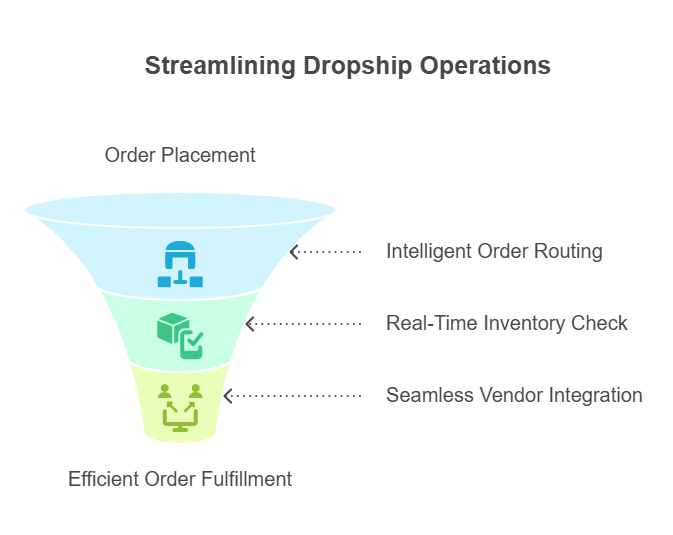
Image source: Flxpoint
Companies leveraging dropship automation platforms report dramatic improvements. One dropship retailer reduced order processing time from 3-5 hours daily to just 15 minutes while eliminating 90% of manual work. Another saw monthly passive revenue grow to $50-90k through automated dropship operations.
The Financial Impact of Dropship Automation
We’ve seen that the investment in dropshipping automation typically pays for itself within 6-12 months through reduced labor costs, fewer errors, and improved customer satisfaction.
Labor cost reduction happens immediately. Tasks that previously required manual coordination, such as inventory updates, order routing, and supplier communication, instead happen automatically. This frees your team to focus on growth activities like supplier relationship management and customer experience optimization.
Error cost elimination provides substantial savings. Each cancelled order due to overselling costs you the lost sale plus customer acquisition costs for that customer’s next purchase. Shipping errors require costly expedited replacement shipments. These expenses add up quickly in manual systems.
Customer lifetime value improvement comes from better experiences. Accurate inventory, faster processing, and proactive communication increase customer satisfaction and repeat purchase rates.
In our experience, Cozy Farm increased its monthly sales by 5-6x after implementing Flxpoint, and Discount Bowling Supply saw a ~90% reduction in daily order processing time, leading to better customer service and higher ratings.
Technology Integration Creates Competitive Moats
Modern dropship automation platforms integrate with the entire ecommerce technology stack, creating operational advantages that compound over time.
- API-First Architecture: Unlike traditional EDI systems that take months to implement, modern platforms connect suppliers through APIs, flat files, and direct integrations. This flexibility means faster vendor onboarding and the ability to work with suppliers regardless of their technical capabilities.
- Machine Learning Optimization: Automated systems learn from order patterns, delivery performance, and customer preferences to optimize routing decisions continuously. Manual processes can’t match this level of dynamic optimization.
- Unified Data Visibility: Instead of managing vendor relationships through separate portals and communication channels, automation platforms provide centralized dashboards showing order status, inventory levels, and performance metrics across all suppliers.
These technological capabilities become especially valuable as logistics networks become more complex. With marketplaces controlling 80% of order logistics and 86% of customers excited by “on-time and as-promised”, businesses need every operational advantage available.
Key Performance Indicators and ROI Metrics
Successful dropshipping automation implementations deliver measurable improvements across multiple operational dimensions. The most impactful metrics include:
- Time Efficiency Gains: Companies typically see 70-95% reductions in manual tasks related to supplier management. Discount Bowling Supply, processing 300-400 orders daily, reduced their order processing time from hours to just 10-15 minutes through automation.
- Catalog Expansion Velocity: Automated systems enable rapid product catalog growth. Screen Skinz experienced 100% automation of their order flow, allowing them to focus on business development rather than operational management.
- Revenue Growth: The combination of expanded catalogs and improved operational efficiency often translates to significant revenue increases. Kenneth Cole saw 2x revenue growth year-over-year after implementing automated supplier connections.
- Cost Optimization: Beyond direct labor savings, automation reduces errors, chargebacks, and customer service costs. The improved efficiency often eliminates the need for additional operational staff during growth phases.
These improvements compound over time. As businesses grow and add more suppliers or sales channels, the value of automation increases exponentially while manual approaches become increasingly unsustainable.
Building for Tomorrow’s Logistics Landscape
The parcel-centric transformation isn’t a temporary trend;it represents the new baseline for logistics operations. Mail volumes will continue declining while parcel demand grows, creating permanent shifts in cost structures and operational requirements.
Businesses implementing dropshipping automation today prepare for several converging trends:
- Urban Consolidation: As cities implement delivery optimization programs, automated systems can adapt routing to work with consolidated delivery models without manual intervention.
- Sustainability Requirements: Environmental regulations increasingly favor efficient logistics networks. Automated dropship reduces unnecessary freight miles by sourcing from optimal locations rather than centralized warehouses.
- Customer Experience Standards: Same-day and next-day delivery expectations require the operational precision that only automated systems can deliver consistently across large supplier networks.
The companies that build these capabilities now create lasting competitive advantages. Manual processes that work today won’t scale to tomorrow’s volume requirements or meet evolving customer expectations.
Ready to Transform Your Operations?
Modern eCommerce demands automated precision. Your customers expect it, your suppliers are ready for it, and your competition is probably already implementing it.
The businesses that thrive in this environment are the ones that recognize automation isn’t just about efficiency;it’s about creating the foundation for sustainable growth in an increasingly competitive market.
If you’re ready to explore how comprehensive dropship automation can transform your operations, Flxpoint’s platform is designed specifically for businesses that understand the strategic importance of automated logistics in driving long-term success.
Related articles
-
 iDrive Partners
Jul 13, 2026
iDrive Partners
Jul 13, 2026
The Importance of Carrier Rates in Your WMS
Read moreWhen WMS rate shopping happens inside the pack-and-ship workflow, margin stops leaking between systems. Here's what it takes to close that seam.