 26
26
 Aug 20, 2025
 14:56
14:56
Can UPS Shrink Its Way to Greatness?
UPS is cutting costs through layoffs, facility closures, and reduced Amazon volume — but is this strategy creating more issues than solutions? In this episode of Parcel Perspectives, Glenn Gooding explains how changes to labor costs, USPS access, and the SurePost model are reshaping UPS’s network and driving pricing volatility. He shares what shippers need to know now: diversify carriers, understand true parcel costs, and stay ready to adapt.



In this episode of Parcel Perspectives, Glenn Gooding breaks down why UPS’s aggressive cost-cutting strategy — marked by 20,000 layoffs, 100+ facility closures, and a drawdown of Amazon volume — may be creating more problems than it solves. He challenges the notion that UPS can ‘shrink to greatness,’ and outlines what this shift really means for shippers.
Glenn explains how structural labor costs, the end of USPS DDU access, and the collapse of the SurePost workshare model are placing low-margin parcels back onto the backs of UPS’s highest-paid drivers. He outlines how this is raising the company’s cost to serve, just as its network flattens and competition heats up.
With market share shrinking and margin pressure rising, shippers are seeing pricing strategies become more volatile — including unpredictable cost add-ons that are difficult to anticipate or quantify. Glenn closes with clear takeaways for shippers: diversify your carrier base, understand your true parcel costs, and be ready to adapt as UPS leans harder into revenue recovery.
[00:00:00] So, if you think about it from a shipper perspective, if you’re a client of UPS and you continue to tender business to UPS, what can you expect in this type of market? Well, what I’ve seen so far this year and in subsequent years is UPS continues to push additional cost increases and additional cost complexities into the marketplace.
[00:00:23] It’s no longer a general rate increase once-a-year event. It is something that they adjust and manipulate on a regular basis. Welcome to Parcel Perspectives, the podcast dedicated to small parcel shippers. I’m Glenn Gooding. In each episode, we dive into insights, best practices, and strategies to help you navigate this complex and costly market.
[00:00:47] Hello, everyone. I’m Glenn Gooding, and this is another episode of Parcel Perspectives. Hope to have a, I think, a fairly lively and controversial topic for you today. Let me give you the title and we’ll see if I can talk my way through this thing without getting into too much trouble — Can UPS shrink its way to greatness?
[00:01:13] Fairly much a touchpoint there for a lot of folks with brown blood. But I want to offer some context. You know, they’ve recently announced 20,000 layoffs, 100-plus facility closures, and a pullback or a drawdown of Amazon volume. It seems as though very clearly that UPS is shifting away from growth to a focus on profitability.
[00:01:35] Is this sustainable? Does it create new risks for shippers? I’d like to break down some things, offer a lot of opinion. I’m going to try to embed that opinion with some empirical perspective. So, I hope you find it helpful.
[00:01:53] So, let’s answer the question to begin with: Can they shrink themselves to greatness?
[00:02:02] I contend no, I don’t think they can, and I think there’s a lot of reasons for me to back that up. I think laying off people has a massive cultural impact. UPS has gone through many downsizing events over the last years, and I think it’s left a real mark. I think it’s also walked a lot of legacy knowledge — very valuable leadership and mentorship knowledge — out the door.
[00:02:28] They are closing down operations. It’s important to note that many of those operations are standalone operations that were propped up to support solely Amazon. More on that in a minute. And can they shrink volume while trying to boost profitability? I think there’s a lot of things we can talk about on that front.
[00:02:50] Let’s talk about UPS from a high-cost network perspective. I think everybody that has any interest in listening to a podcast like this already knows that UPS is the most expensive operator in the space. They have a Teamster contract. That Teamster contract was unbelievably favorable for the Teamsters that went through.
[00:03:13] But I want to offer you some additional perspective on why shrinking volume in a UPS network has an even greater impact than one might think. The most expensive human asset in the UPS operation from a Teamster perspective would be those drivers. Those drivers work real hard. They do a wonderful job.
[00:03:36] They should be fairly compensated. I’m not here to say they shouldn’t, but it’s important to note that not only are they paid very well, there’s some details on that. What you may not know is when you finally make it to become a driver, you get hired to become a driver, you’re not brought in on a full wage rate.
[00:03:58] I think the most recent labor agreement has a four-year wage progression. Why is that important? Well, in a growing environment, you’re having to add new driver positions. New driver positions will place drivers at a cheaper cost structure for UPS for the subsequent four years. When you become static in volume or decline in volume, the only potential new drivers you’re bringing on are those from a succession plan.
[00:04:31] Someone retires and goes away. And so, from a macro perspective, in a UPS delivery cost network, plan on, in a normal growing environment, a function of growth — but let’s say 30 to 40% of the driver workforce is in some form of that four-year wage progression. That means 30 to 40% of the driver workforce is paid at a much cheaper labor rate.
[00:04:58] When you flatten or shrink volume — do a drawdown in volume — you’re actually increasing your labor expense. You’re taking all of those drivers on wage progression out of the equation. You’re not hiring new drivers, so you have a higher, fully loaded wage rate for the driver position, and it places a greater cost burden on UPS.
[00:05:23] Now, we talk about Amazon in a drawdown in Amazon volume. I think it’s important to understand what’s going on there. Number one: prior to the drawdown announcement, Amazon amounted to about 11.8% of UPS’s average daily volume. That’s a massive number. That’s a very serious client concentration issue with Amazon, and I think one would also infer that the rates Amazon has with UPS are probably in the class of most favored nation or very close to it, so one could conclude that parcels shipped via Amazon on Amazon’s rates would be the lowest profitability of any parcels moving through the carrier network.
[00:06:08] And anyone that has listened to any of my previous podcasts [knows] that residential deliveries have a higher cost component than commercial deliveries. And so, the majority of Amazon’s business is less than 10 pounds, and the majority is residential.
[00:06:27] So, UPS is attempting to take the lowest profitability, highest-cost-to-serve parcels out of their network. So, another reason behind that involves implications with the USPS. One of my previous podcasts also talked about Delivering for America with the USPS and what they’ve done with the Workshare program, which was very impactful to UPS with their SurePost product.
[00:06:55] So, effective December 26, UPS could no longer induct packages at the DDU level, at the post office — otherwise known as a local post office — for final mile delivery. It would have required them to instead induct at the DHub, which was impossible to do with the current package flows because those decisions were made from a technology perspective at the package car.
[00:07:22] And it was very cost-punitive. They went from their NSA to effectively published rates, so anything up to a pound was $5.10, so that immediately came off the board. When you think about the impact of that on a delivery network, if we just talk about some example numbers, imagine a package delivery route filled with parcels, a driver is dispatched for a nine-hour day. Of that nine-hour day, there are 30 packages that are destined for the local DDU for delivery for that driver. That driver would stop at the local post office and make a commercial delivery of 30 parcels. Those 30 packages will not be delivered by the UPS driver on that given day.
[00:08:10] Instead, it was a very profitable commercial delivery. Well, overnight, those 30 parcels are converted to a UPS final-mile delivery. So, that nine-hour day now became an excess of probably a 10- or 11-hour dispatch day if they don’t adjust the dispatch level. And they’re pushing some of the highest-cost-to-serve deliveries, lowest-profitability deliveries in the network into their highest-paid employee base.
[00:08:40] Tough way to go. So, real challenge for them. And with regard to growth, looking out there to the marketplace, they don’t have a cost structure that justifies chasing the lightweight residential market — less than a pound, one to five pounds. Very problematic for them if they can’t marry that up with a second package.
[00:09:09] So, what UPS is left to do right now is to compete with existing market share — possibly shrinking market share — and duke it out with FedEx. All the while, Amazon builds out their final-mile delivery network, tendering some of their heavy packages to FedEx for final-mile delivery.
[00:09:34] Walmart [and] Target continue to build out their final mile capabilities and pull their volume out of the available market share. And other providers fill the gap or the void that was created by the Delivering for America move at USPS and kind of attacking the postal aggregator or consolidator market, shifting to a one-pound-and-up strategy, if you’re a DHL eCommerce or technology-based gig economy delivery solution, the likes of a Veho, UniUni, SpeedX, et cetera. So, UPS is left to try to improve profitability with the remaining market share. Now, is this a smart play or a risky play? From what I’ve seen, I think it’s very, very risky.
[00:10:26] So, if you think about it from a shipper perspective, if you’re a client of UPS and you continue to tender business to UPS, what can you expect in this type of market? Well, what I’ve seen so far this year and in subsequent years is UPS continues to push additional cost increases and additional cost complexities into the marketplace.
[00:10:49] It’s no longer a general rate increase once-a-year event. It’s something that they adjust and manipulate on a regular basis. Have a feel — go listen to my fuel surcharge explanation in my podcast, and you’ll get a clear understanding of what they’ve done there. By the time you hear this, you will have heard my discussion around UPS’s change to additional handling charges for dimension-based parcels.
[00:11:17] So, UPS on almost a monthly basis now is imposing new changes. Those changes always invariably impose additional costs, and they’re done in ways that can be very hard to quantify or understand, or even proactively measure and mitigate. So, the risk to you as a shipper within the UPS environment is you need to keep an eye on your budget.
[00:11:42] You need to keep an eye on your forecast cost per piece. And when you see changes, you need to have someone that can help you analyze and understand what’s driving those things.
[00:11:56] Long-term implications for the parcel landscape stability: do I think UPS is going away? Absolutely not. I think they fill an important service area, but I think they have some things they have to solve for.
[00:12:12] They need to figure out an economical way to compete in the residential market. Until they figure that out, they’re going to continue down this path of shrinking to greatness. They’re going to continue to try to make up for revenue shortfalls by imposing additional rate increases and billing methodologies that are going to be hard for you to quantify and understand, and they’re going to frustrate you.
[00:12:39] What you should be doing right now? Don’t assume that your pricing will remain competitive — it’s changing all the time. You need to consider alternatives for lightweight residential shipping. And you need to have some contingency plans. You need to prepare for some volatility in service levels and pricing.
[00:13:02] So, can UPS shrink to greatness? I don’t think so. I hope I’ve provided enough information to help you better understand what’s happening in the marketplace, why UPS might be doing what they’re doing right now, and what those potential risks are to you as a shipper.
[00:13:24] As far as key takeaways, have great analytics, have great visibility into your spend and all the different pricing levers. Have someone on staff or have access to someone who truly, deeply understands the small parcel market and can help you navigate this, and do what you can to practically build out contingencies and mitigate your risk with single sourcing with a carrier like UPS that is performing the revenue management techniques there are in the marketplace right now.
[00:14:00] Appreciate you listening. If I can be of any assistance, don’t hesitate to reach out. It’s Glenn Gooding with Parcel Perspectives. Have a great day.
[00:14:13] Thanks for listening to Parcel Perspectives, hosted by me, Glenn Gooding. I’ve been in the small parcel space for 37 years, starting with a deep and broad background working for one of the major carriers as an operator and industrial engineer, later managing pricing at the highest level for the largest, most complex shippers in the world.
[00:14:32] Since then, I’ve been a national thought leader and worked to help drive strategy for clients from Fortune 50 companies to start-up eCommerce businesses, helping them more competitively align in this complex and expensive market. If you enjoyed the show, please subscribe and share with friends. Join us next time for more expert advice and strategies to stay ahead of the shipping game.
Key Topics with Timestamps
- 01:13 Layoffs, closures, and Amazon’s drawdown
- 03:13 Driver wages and shrinking volume costs
- 05:23 Pulling low-profit, high-cost parcels
- 06:55 USPS “Delivering for America” effects
- 08:40 Profitability challenge in lightweight delivery
- 09:09 Competing with FedEx, retailers, and gig networks
- 10:26 Frequent UPS cost adjustments
- 12:39 Key shipper actions to adapt
Other Podcasts
-
10
Jan 22, 2025
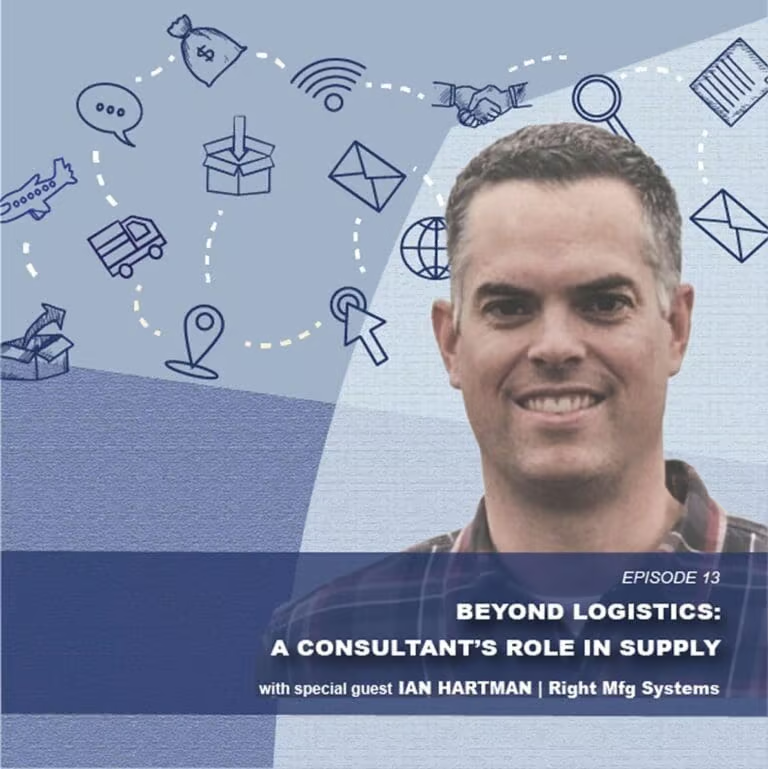
A Consultant’s Role in Supply Chain & Carrier Contracts
Discover how logistics consultancy revolutionized small parcel shipping for Right Manufacturing Systems in this episode of Parcel Perspectives. Join Glenn Gooding and Ian Hartman as they discuss achieving a 23% reduction in shipping costs, leveraging data for smarter decisions, and the invaluable insights gained from expert consultancy. Tune in to learn how deep industry knowledge and strategic negotiations can transform your logistics operations.
-
9
Nov 13, 2024
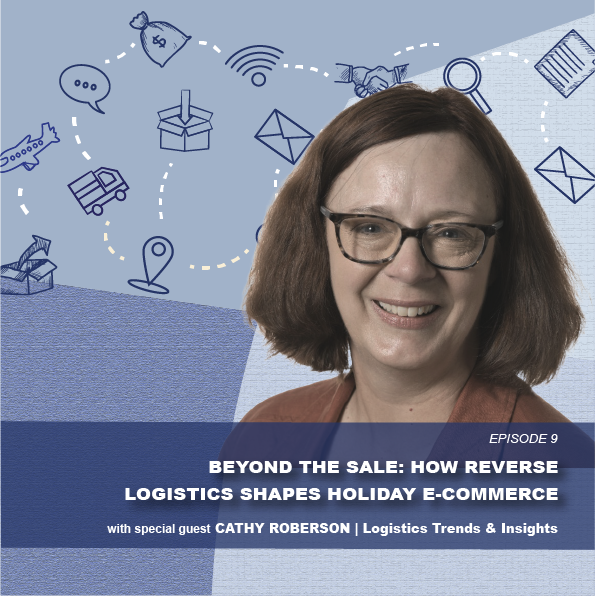
How Reverse Logistics Shapes Holiday eCommerce
Join Glenn Gooding and Cathy Roberson as they dive into the world of reverse logistics. Discover how carriers like UPS, FedEx, and USPS are adapting to the growing returns trend, and explore innovative strategies for handling oversized items and complex returns. Learn about the latest trends, including "bracketing" and sustainable practices, and how AI is transforming the returns process.
-
15
Feb 19, 2025
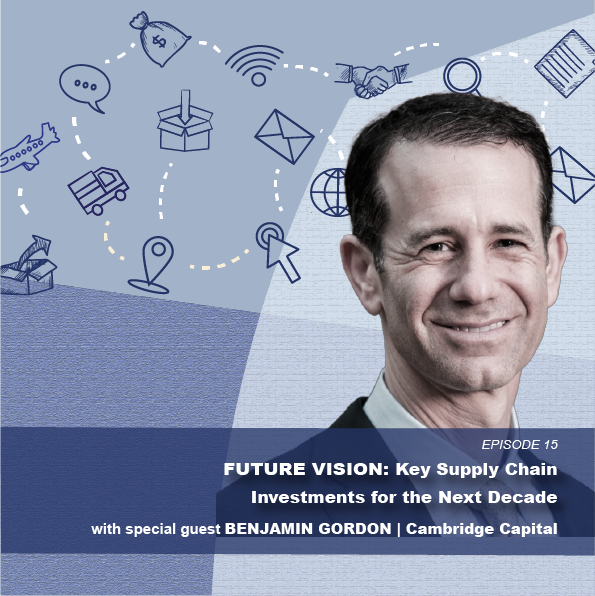
Future Vision: Key Supply Chain Investments for the Next Decade
The Future of Logistics is Here. Join Glenn Gooding and special guest Benjamin Gordon, Managing Partner and CEO at Cambridge Capital, in this week's episode of Parcel Perspectives as they explore the cutting edge of supply chain management. This episode covers it all: the AI revolution, the eCommerce explosion, the crucial role of customer experience, and the growing importance of sustainability. Get expert insights into future investment opportunities and discover how to build a resilient supply chain that can withstand any disruption. Tune in and future-proof your business!