
 Shipping
 Jan 20, 2026
How to Measure Shipping Performance: The Shipping KPIs That Matter
When your brand’s reputation hinges on every delivery, you want to ensure your logistics operate to the highest standards. Are your packages arriving on time, and in good condition? Are you sending the right items every time? You can figure all of this out by tracking the right shipping KPIs. In this blog, we show...
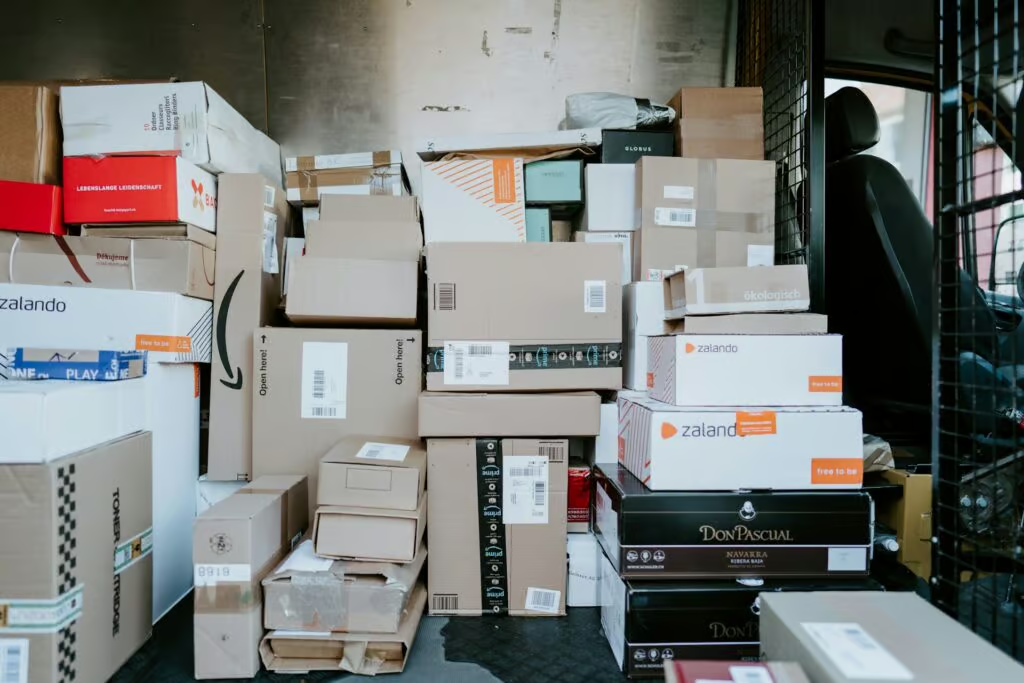
When your brand’s reputation hinges on every delivery, you want to ensure your logistics operate to the highest standards. Are your packages arriving on time, and in good condition? Are you sending the right items every time? You can figure all of this out by tracking the right shipping KPIs.
In this blog, we show you how to measure shipping performance, covering key KPIs such as order accuracy, on-time delivery, and cost-per-parcel, and how to turn this data into lower costs, faster speeds, and ultimate reliability.
Why Shipping Metrics Matter
Consumer shipping expectations have shifted dramatically in recent years, with fast, on-time, trackable shipping now the norm. In fact, over 90% of customers expect 2-3 shipping, as standard, for free. Deliveries are no longer just the final part of the shopping process; they are part of the shopping experience, making your fulfillment center’s performance more important than ever.
By tracking shipping metrics against data-backed KPIs, you unlock:
- Predictive insights: The ability to spot problems before they become issues
- Accountability: Concrete targets for your carriers to meet
- Customer satisfaction: A level of service that delights your customers
- Cost savings: The ability to reduce claims, lost revenue, and avoid penalties
You’ve invested time in choosing the right fulfillment partner; now it’s time to ensure they perform on the shipping front.
How to Measure Shipping Performance
The best way to implement shipping metrics and performance monitoring is through a four-step approach grounded in data.
Step 1: Create a baseline
Gather existing data from your 3PL or internal operations to create a performance baseline, i.e., how your 3PL is currently performing. Don’t worry if there are gaps. Your baseline might simply be that you currently aren’t tracking fulfillment center performance, but your 25% customer complaint score suggests an issue.
Step 2: Benchmark your data
What does a good return rate look like? What percentage of orders should arrive on time? You don’t have to guess how well your fulfillment partner is performing; instead, use industry averages and carrier standards to benchmark your current data and set goals for future metrics.
Tip: Use 3PL industry reports, market research reports, and industry surveys to collate this data. Or get in touch with the iDrive team, and we can advise.
Step 3: Choose KPIs based on brand goals
Next, choose the KPIs that align with your business values and weight them accordingly. For example, do you prioritize sustainable deliveries over speed, or expedited delivery over costs? We’ll cover key shipping KPIs to track below.
Step 4: Create a scorecard
Finally, use all this information to create a scorecard that weights each KPI, sets an appropriate target, and provides real-time performance insights. You can use these insights when it comes time to renegotiate carrier contracts, calling out instances where a carrier might have fallen short of their service level agreements.
Key Shipping KPIs to Track
There are many shipping KPIs and fulfillment center metrics you can track, the most common being:
Order accuracy rate
Order accuracy rate is the percentage of orders shipped without any errors—i.e., the right product, in the right quantity, with the correct packaging, to the right customer. This is a fundamental metric because an inaccurate order results in returns, refunds, re-shipping, and customer complaints, all of which damage your reputation, profits, and capacity. Ideally, you want a rate of 99% or higher.
Average time from order to shipment
This KPI measures the average time between a customer placing an order and the order leaving the warehouse. Long averages can result in late deliveries or more costly shipping services to catch up, and often indicate wider problems such as inefficient picking, manual data entry, or issues with system communications. Most brands aim for an order cycle time of under 12 hours.
Carrier pickup reliability
Carrier pickup reliability measures how often carriers collect shipments from your fulfillment center as scheduled. When a carrier misses a pickup, it disrupts the delivery process, frequently results in late deliveries and unhappy customers, and highlights the need to address the issue with that carrier.
On-time delivery rate and transit time accuracy
These metrics measure the percentage of orders that arrive on time, as promised by you, and within the carrier-estimated delivery window. A low on-time delivery rate can indicate a problem with your fulfillment center and/or carrier, whereas low transit time accuracy signals an issue with your carrier.
Cost per parcel
This KPI divides the total fulfillment and shipping costs by the number of parcels shipped, giving you an average price per parcel. This includes storage, packing material, labor, shipping labels, carrier costs, and any surcharges. By reviewing this metric month-on-month, you can identify cost creep and opportunities to reduce spend without impacting quality. The industry average is between $6 and $8 per order for mid-sized eCommerce brands (depending on weight and shipping zones).
Claims, damage, and return rates
Claims, damaged items, and returned products all cost you money and reputation, making them essential metrics to monitor. We recommend tracking these rates by SKU, carrier, and packaging types to help pinpoint root causes such as carrier mishandling, ineffective packaging, or process errors. Average return rates vary by industry, with fashion and apparel typically 20-30%, and cosmetics 5-8%.
Scan compliance and tracking visibility
73% of customers want to track orders throughout delivery, making these metrics particularly meaningful to them. Scan compliance and tracking visibility measures the percentage of parcels scanned throughout the fulfillment and shipping process. A high percentage increases customer confidence and improves the delivery experience, while a low percentage causes frustration, anxiety, and an increase in support queries.
Peak season capacity and performance
This KPI tells you how well your fulfillment center handles volume surges during busy periods. This includes available warehouse space, labor capacity, and throughput rates. Many businesses will conduct a simulated “stress test” to check this KPI before it matters.
Customer satisfaction scores
Arguably the most important metric of them all is how happy are your customers with their delivery experience? As a rule of thumb, customer satisfaction scores above 4.5 out of 5 and Net Promoter Scores above 60 indicate a positive fulfillment experience.
Pieces-per-stop
Finally, another metric you may want to track is pieces-per-stop (PPS). This metric tracks your residential delivery profitability, and is often overlooked simply because shippers don’t think about it. If you can improve the number of pieces delivered per stop, you unlock further efficiency and shipping savings.
Turning Shipping Metrics into Actionable Results
You’ve picked your KPIs, you’ve set performance levels, and your scorecard is up and running—are we done? Absolutely not. Turning your fulfillment center’s shipping metrics into actionable results is an ongoing process, as follows:
1. Establish regular performance reviews
Never set it and forget it. Schedule monthly or quarterly structured review meetings with your fulfillment partner, where you use scorecards and data dashboards to jointly analyze performance, spot trends, and uncover root causes of issues.
2. Conduct regular audits
Periodically audit specific KPIs to gain a deeper insight into what’s happening and why. You can conduct these sessions collaboratively with your 3PL to identify bottlenecks and implement solutions.
3. Know the warning signs
Watch out for red flags like repeated missed SLAs, unexplained costs, and slow responses to issues. When you have concerns, gather reliable data and discuss them with your fulfillment partner before they escalate. Minor problems don’t necessarily warrant a change in providers, but when they’re regularly affecting your brand and margins, it might be time to look elsewhere.
Further reading: When Fulfillment Breaks Down: What Growing Brands Get Wrong About 3PL Fit
4. Create a Fulfillment Performance Scorecard
One of the best ways to monitor fulfillment partner performance is to visualize key metrics in a centralized, live dashboard. Even better, segment performance by carrier, region, product line, or warehouse to pinpoint issues and speed up solutions.
5. Review costs regularly
Don’t let costs creep into a problem. Track accessorial and hidden fees regularly, monitor cost-per-parcel, and review your invoices. Performance data can also be used to optimize packaging, reduce damage claims, and improve your carrier selection.
6. Foster a true partnership
The quicker you view your fulfillment center as a partner, rather than a supplier, the better. Treat KPIs and performance reviews as the foundation of a strong relationship, with joint goals focused on customer satisfaction, operational excellence, and value for money.
Conclusion
Shipping KPIs aren’t just numbers; they’re essential tools for protecting and scaling your brand’s reputation. By following the above framework and identifying the key KPIs for your fulfillment center, you can start working together to build a partnership grounded in accountability, transparency, and shared goals.
If you’d like to learn more about benchmarking, monitoring, or optimizing fulfillment performance, get in touch with iDrive’s experts today.
Related articles
-
 Shipping
Aug 12, 2024
Shipping
Aug 12, 2024
4 Must-Ask Questions When Negotiating Your Carrier Agreement
Read moreNegotiating a carrier agreement is a highly nuanced, complex process; but for businesses spending a large amount (> $100,000/year) on shipping, negotiating agreements becomes crucial for efficient and economical shipping.
-
 Shipping
Sep 30, 2024
Shipping
Sep 30, 2024
Diving Into General Rate Increases (GRI): What They Are and What They Really Mean
Read moreIt’s that time of year when shippers are beginning to see the effects of General Rate Increases (GRI). This year, both FedEx and UPS are raising their rates by 5.9%, both of which increases are now in force.
-
 Shipping
Mar 31, 2025
Shipping
Mar 31, 2025
Rate Shopping: How to Balance Cost and Quality in Your Shipping Decisions
Read moreIf you’re involved with shipping products you’ve probably heard the term ‘rate shopping’. Rate shopping refers to comparing rates of different carriers to select the cheapest service, but what if shippers were thinking about it all wrong?